A C-frame press is defined by its open three-sided structure, but selecting one for stainless work requires more than reading its tonnage rating. By the end, you will be able to identify its hydraulic components, estimate the force and work envelope you need, match operations to the machine, and recognise when another press or cutting system is safer and more productive.
Key takeaways
- Use the open throat for faster loading of plates, brackets and small assemblies.
- Size tonnage from material thickness, operation and die geometry—not stainless grade alone.
- Specify stroke, daylight, throat depth, bed size and pressure controls before comparing quotes.
- Choose guarding and two-hand controls when operators work directly inside the die area.
What the C-frame shape changes on the shop floor
A C-frame press has a vertical back with upper and lower members forming a three-sided opening. That open throat gives you front and side access to the die area, making it easier to load punched mounting plates, brackets, panels, covers, welded fabrications and small tube assemblies.
| Option | Access around tooling | Structural trade-off |
|---|---|---|
| C-frame | Open front and sides; easier loading and unloading | More sensitive to frame spreading and off-centre force |
| H-frame | Two columns limit access around the die | Stronger resistance to frame spreading and misalignment |
The access advantage matters when a stainless fabrication is awkward to grip or must be positioned around a fixture. The risk is eccentric loading: placing the workpiece far from the cylinder centreline can deflect the frame, tilt the ram, damage guides and shorten die life.
Keep the force line centred, use a supporting fixture, or confirm the manufacturer’s stated off-centre loading limit before pressing.
The phrase c frame press for stainless steel fabrications in pune identifies a configuration and application, not a separate performance class. The same press can process carbon steel, stainless steel, aluminium or tube work when its force, throat depth, stroke, tooling, guarding and controls match the operation.
An open throat does not make a press suitable for every job; long sheets, deep forming and unsupported tube work demand different support and machine geometry.
How the hydraulic circuit delivers a controlled press stroke
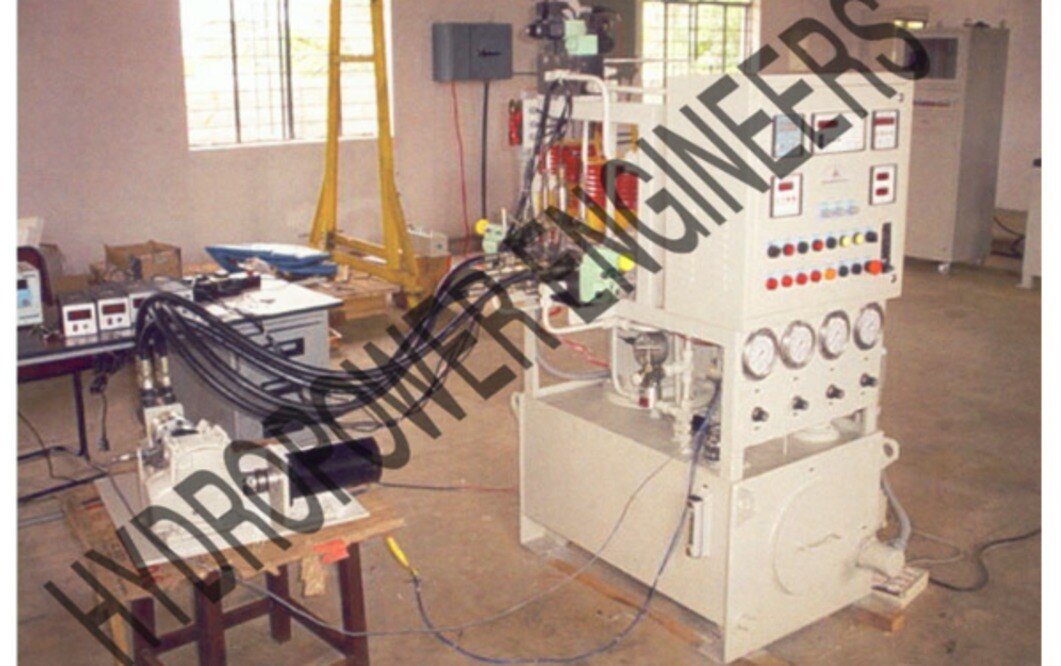
An electrical command becomes ram movement through the power pack. The electric motor drives the pump, which draws oil from the reservoir and sends it through filters and a directional valve to the hydraulic cylinder. The valve directs oil to extend or retract the cylinder; a pressure-control valve limits pressure and protects the circuit.
The cylinder moves the ram, the bolster supports the die and workpiece, and tooling converts force into punching, bending, forming or assembly.
| Specification | What it controls | Why it matters |
|---|---|---|
| Approach, pressing and return speed | Ram movement during each phase | Two presses with equal tonnage can produce different cycle times |
| Stroke, daylight and usable throat depth | Vertical travel and working envelope | A die or part can exceed the available space |
| Bed size and die area | Support for tooling and workpiece | An undersized bed creates unstable or unsafe loading |
| Pressure, flow and motor power | Available force and speed | Low flow can make the press slow at the working stroke |
Ask for force-versus-stroke data, not just maximum tonnage. Rated force equals cylinder area multiplied by hydraulic pressure, but that force may fall at speed or before the full stroke ends. Request dwell time and a complete cycle calculation covering loading, approach, pressing, dwell, return, unloading and die changes.
For a c frame hydraulic press in pune, compare those figures with the actual stainless operation rather than treating the search phrase or a 200-ton rating as a performance guarantee.
How to size force and capacity for stainless steel work
A 304 label does not determine press capacity. A hydraulic press for stainless steel fabrications must be sized for the operation, geometry, material condition and production rate.
1. For punching or piercing, estimate force as cut perimeter × material thickness × shear strength. Add allowances for stripping and friction. Give the supplier the largest hole or cut geometry, perimeter, thickness range, grade, temper and required production rate.
2. For bending or forming, calculate force from bend length, thickness, die opening, inside radius, material strength and forming method. A 304 part and a 316 part may need different tooling or force. Both grades can work-harden strongly during deformation.
3. Check the process history before selecting capacity. Repeated forming, blunt punches or an unsuitable radius can increase later-pass force, accelerate tool wear, and cause cracking or dimensional variation. Springback can leave the bend angle open after unloading, so use overbend, compensation or coining when trials show it is necessary.
Select the press after checking calculated forming force, die area, stroke, daylight, usable throat depth and a defined safety margin. Do not treat 200 tons as a universal recommendation: maximum tonnage does not guarantee angular accuracy, adequate workspace or safe off-centre loading.
Confirm the die fits the bed and that the frame, ram guidance and tooling can withstand the actual load.
Which stainless fabrication operations fit a C-frame press
Blanking and punching mounting plates, brackets and panels are strong C-frame press applications when a guided die keeps the load within the throat. The same configuration suits shallow forming, embossing, bending, straightening, riveting and assembly when stroke, die clearance, ram guidance, force and dwell are repeatable.
| Operation | Fit | Limit to check |
|---|---|---|
| Blanking and punching | Plates, brackets and panels | Keep the die guided and the load within the throat |
| Shallow forming and embossing | Local features and recessed panels | Confirm stroke, clearance and ram guidance |
| Bending and straightening | Small fabrications and correction work | Check springback, side loading and final-angle accuracy |
| Riveting and assembly | Controlled joining and pressing | Specify force, stroke and dwell |
| Tube piercing, flattening and end closing | Only with operation-specific tooling | Use mandrels, plugs, supports or sacrificial inserts |
Stainless steel needs a separate tooling specification. Galling can occur when stainless slides against unsuitable tooling, and poor clearance, rough tool faces or trapped chips can scratch the part. Name the tool material, surface finish, lubricant, cleaning method and clearance; extra tonnage will not cure galling.
Unsupported tube work can collapse the section or create excessive ovality. Choose an H-frame or four-column press for long parts beyond the throat, large sheets needing uniform support, deep drawing or broad-area force. A press brake suits long bends, while a turret punch or laser cutter suits repeated sheet patterns and high-volume cutting.
What to specify before buying a C-frame press in Pune
Turn the job into a written enquiry, not a request for “a 200-ton press.” State the stainless grades and tempers, thickness range, largest part, operation, die dimensions, required stroke, bend or hole geometry, production rate and acceptable tolerances.
- Ask the supplier to size force from the actual cut perimeter, thickness and stainless shear strength, with allowances for stripping and friction. For forming, provide bend length, die opening and inside radius.
- Specify programmable pressure and position control, pressure-hold timing, recipe storage, overload protection, ram parallelism monitoring and die-height adjustment when repeatability matters.
- Define the work envelope: usable throat depth, daylight, bed size, stroke, approach speed, pressing speed and return speed. A C-frame hydraulic press in Pune with insufficient throat or access can make a correct tonnage rating unusable.
- Put point-of-operation guarding, two-hand controls or a guarded work area, emergency stopping, die retention and maintenance isolation into the risk assessment. ISO 16092 is the dedicated press-safety series; OSHA’s machine-guarding rule, 29 CFR 1910.212, addresses point-of-operation and moving-part hazards. Request the statutory safety documents applicable to your installation.
- Confirm three-phase electrical supply, floor loading, installation access, transport route, service response, spare parts and tooling availability before approving the design. Include these details when sourcing a hydraulic press for stainless steel fabrications in Pune.
- Have the supplier review the actual part, die, force, work envelope and site constraints. Hydropower Engineers can support that evaluation as a Pune manufacturer of customised hydraulic machinery, rather than relying on nominal tonnage alone.
Related product
 | Hydraulic Presses We are a leading and well-recognized manufacturer of C-Frame Hydraulic Presses, widely used in applications such as embossing, punching, piercing,... View product → |
Frequently asked questions
What does the C-frame shape change on the shop floor?
Its three-sided opening provides front and side access to the die area, simplifying loading and unloading of plates, brackets, panels and small tube assemblies.
How do you size a C-frame press for stainless steel fabrications?
Calculate force from the operation, stainless thickness, bend or forming geometry, die width and required stroke, then check throat depth, daylight and bed capacity.
Which stainless steel fabrication operations suit a C-frame press?
Suitable applications include punching, bending, straightening, embossing, forming, pressing inserts and assembly work on small parts and welded fabrications.
What should you specify before buying a C-frame press in Pune?
Provide the maximum workpiece size, stainless grades and thicknesses, operation, required tonnage, stroke, throat depth, daylight, bed size, cycle rate, controls and guarding requirements.