A press-brake power-pack quote can look inexpensive when it covers only a motor, pump, and tank, while the machine still needs valves, controls, filtration, hoses, safety devices, and commissioning. By the end, you will be able to calculate the required pressure and flow, compare standard and custom units, and normalize Chennai quotations against the same scope.
Key takeaways
- Demand a complete quote covering valves, manifold, controls, wiring, and synchronization hardware.
- Calculate pump flow from cylinder speed, not from press tonnage alone.
- Choose a custom unit when space, duty cycle, or machine controls exceed standard specifications.
- Compare lifecycle cost, service access, filtration, noise, and spare-part availability before ordering.
What a Chennai power-pack quotation should include before you compare prices
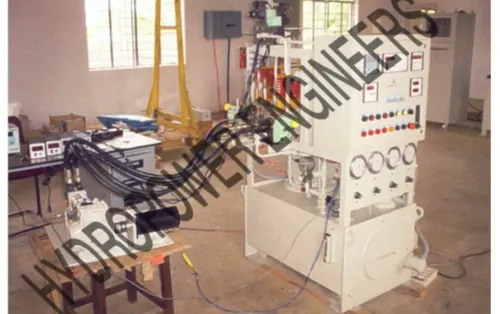
A comparable quotation must define the complete hydraulic package, not just the pump-and-motor assembly. The advertised hydraulic press for brake power pack cost in chennai is misleading if it excludes the manifold, directional or proportional valves, relief and anti-drop valves, synchronization hardware, electrical controls, and machine-interface wiring.
Normalize every hydraulic power pack price in chennai quotation against these inclusions:
- Motor, pump, reservoir, suction strainer, return filter, level and temperature indicators, pressure gauge, and cooling provision.
- Custom manifold, valves, hoses or rigid piping, pressure switch, gauges, mounting frame, guards, and port adapters.
- Motor starter or VFD, electrical enclosure, control-panel wiring, emergency-stop interface, and signals to the press controller.
- Hydraulic oil, pressure-flow testing, leak testing, delivery to Chennai, installation, alignment, commissioning, operator instructions, and warranty travel.
| Quote type | Usually included | Confirm before comparing |
|---|---|---|
| OEM replacement | Matched mounting and machine interfaces | Delivery, commissioning, controller compatibility, and warranty exclusions |
| Local pack builder | Custom manifold, valves, piping, and integration | Component brands, part numbers, test records, and service response time |
| Pump-motor assembly | Tank, pump, motor, and basic relief valve | All press controls, synchronization, hoses, oil, testing, and installation |
Require a dimensional drawing, hydraulic schematic with component part numbers, motor and pump nameplates, pressure-flow test results, spare-filter and seal-kit prices, noise declaration where relevant, warranty exclusions, and a stated service response time. A low headline price is not comparable until every missing line is priced.
Calculate pressure, flow, motor power, and cylinder speed from the press design
Press force determines required pressure only after you account for cylinder area. For a double-acting press brake, calculate each cylinder’s effective piston area, multiply by the number of cylinders, and allow for seal friction, rod-side area, and mechanical losses.
- Pressure: P = force ÷ total effective piston area. A 100 mm-bore cylinder at 250 bar produces about 196 kN, or 20 metric tonnes-force, before losses. Do not size from press tonnage alone.
- Cylinder speed: speed = stroke ÷ movement time. A 300 mm stroke completed in 3 seconds requires 100 mm/s during that movement.
- Pump flow: Q = effective area × speed. Convert the result to litres per minute and size the pump for the highest required flow during approach, forming, or return.
- Hydraulic power: kW = pressure in bar × flow in litres per minute ÷ 600. Select the motor above this figure to cover pump and motor efficiency, starting load, heat, and duty cycle.
The approach, forming, and return movements can require different flows. Use the peak flow for pump and valve sizing, but check pressure at the forming stage; excessive flow increases motor size, throttling loss, valve cost, and noise.
Stroke also determines oil volume: cylinder area multiplied by stroke gives the oil required for one movement. That figure helps set reservoir capacity and prevents starvation. A hydraulic press brake power unit quotation should state pressure, peak flow, motor rating, cylinder arrangement, cycle times, and duty cycle.
When a standard unit is enough—and when the brake needs a custom power unit
Buy an off-the-shelf power pack when the brake has a fixed production rhythm, one cylinder circuit, adequate installation space, and no strict noise limit. A standard motor-pump-tank assembly costs less and replaces faster, but a basic fixed-displacement circuit can create pressure shocks, sluggish return strokes, and excess heat.
Specify a custom unit when cycle time, synchronization, sound, temperature, or footprint affects production. Use this comparison before accepting a low headline price.
| Option | Standard unit | Custom power unit |
|---|---|---|
| Cycle time | Suits moderate, repeatable cycles with available flow | Adds unloading, proportional, servo, or variable-displacement control for faster approach and return |
| Synchronization | Works when mechanical linkage or existing controls maintain parallel movement | Adds matched valve control, position feedback, or a dedicated synchronization circuit |
| Noise and heat | Acceptable where intermittent duty and room ventilation control temperature | Uses lower-noise pumps, unloaded standby, cooler capacity, and oil-temperature monitoring |
| Space | Requires a conventional tank, motor, and valve assembly footprint | Uses a shaped reservoir, remote cooler, compact manifold, or machine-integrated layout |
Define whether the quotation covers only hydraulic energy generation or a tested package with motion control, safety functions, electrical controls, and the machine interface. Omitting that distinction makes two industrial hydraulic power systems appear comparable when they are not.
- Dimensional drawing and hydraulic schematic with component part numbers
- Motor and pump nameplates, pressure-flow test results, and duty-cycle limits
- Filter beta rating, clogging indicator, breather, oil grade, and cooler details
- Noise declaration, warranty exclusions, spare-filter and seal-kit prices, and service response time
A custom unit is justified when the cost of slow cycles, overheating, uneven movement, or difficult access exceeds its higher purchase price.
Compare fixed, portable, and machine-integrated options available in Chennai
A new press-brake installation in Chennai usually suits a machine-integrated power pack: the manifold, valves, sensors, and electrical signals are matched to the press controls. Choose a fixed standalone unit when floor space and access matter more than compactness. Choose a portable pack for temporary testing, maintenance, or machines that must move between bays.
| Option | Best match | Main trade-off |
|---|---|---|
| Fixed standalone | Existing brake with accessible floor space | Easier service, but needs piping and guarding |
| Portable | Testing, breakdown backup, or shared equipment | Fast to deploy, but hoses and reconnection add risk |
| Machine-integrated | New brake or major retrofit | Lowest interface risk, but less interchangeable |
For a meaningful Chennai comparison, request three technically equivalent offers:
- The original press-brake OEM replacement, which reduces controller and mounting mismatches.
- A Chennai hydraulic-system integrator or local pack builder, which can adapt the manifold, signals, and space constraints.
- A component-brand or distributor-based assembly, which can suit standard circuits but needs closer interface checks.
Match mounting dimensions, port sizes, pressure-flow curves, motor power, electrical signals, and controller communication before comparing the hydraulic power pack price in Chennai. Normalize GST, freight, oil, starter or VFD, panel wiring, installation, testing, commissioning, and warranty travel.
If you plan to buy hydraulic power pack in Chennai, ask Hydropower Engineers for the hydraulic schematic, dimensional drawing, component part numbers, test results, and service response time. For a retrofit, these documents matter more than a low pump-and-motor-only price.
Related products
 | Hydraulic Power Pack Hydropower Engineering Systems offers high-performance Hydraulic Power Packs designed to meet a wide range of industrial application requirements... View product → |
 | Portable Mobile Hydraulic Power Unit Portable Mobile Hydraulic Power Unit Power your operations anywhere with the Portable Power Unit from Hydropower Engineering Systems, a highly efficient mobile hydraulic power solution... View product → |
Use a technical and lifecycle checklist before placing the order
Confirm the package scope in writing: a compact motor-pump-tank assembly generates hydraulic energy, while a tested machine package can also include the manifold, motion control, cylinder synchronisation, safety circuits, electrical panel, and press-brake interface. Do not compare industrial hydraulic power systems until both quotations cover the same functions.
1. Request a general-arrangement drawing, hydraulic schematic with component part numbers, motor and pump nameplates, pressure-flow test results, and the control I/O list. The quotation must state maximum pressure, pump flow, motor power, reservoir volume, valve type, duty cycle, filtration, cooling, hoses, gauges, oil, installation, commissioning, and software interfaces.
2. Record the installation conditions: supply voltage and frequency, ambient temperature range, humidity, dust or metal-particle exposure, available floor space, mounting points, port sizes, allowable noise level, and cooling-air clearance. An undersized cooler or sealed enclosure in a hot shop will raise oil temperature and shorten seal life.
3. Check safety against the machine risk assessment and ISO 4413, ISO 13849-1, and EN 12622 where applicable. Verify a pressure-relief valve, pressure gauge, emergency-stop response, hose-burst protection, guarded moving parts, safe dump valve, lockable isolator, and restart prevention after power loss.
4. Price ownership, not only the hydraulic press brake power unit: electricity, oil changes, suction and return filters, clogging indicators, breathers, seal kits, cooler cleaning, calibration, spare-part lead time, warranty exclusions, and service response time. Require beta ratings and replacement prices; a cheap filter that bypasses unnoticed can create recurring valve failures.
Frequently asked questions
What should a Chennai power-pack quotation include?
Request the pump, motor, reservoir, manifold, directional or proportional valves, relief and anti-drop valves, synchronization hardware, electrical controls, machine-interface wiring, filtration, testing, documentation, installation, and commissioning as separate line items.
How do you calculate hydraulic press brake power-pack size?
Use cylinder area and required pressure to determine force, cylinder speed to determine flow, and pressure and flow to estimate hydraulic power before allowing for pump, motor, and system losses.
When does a press brake need a custom hydraulic power unit?
Choose a custom unit when the brake has unusual pressure or flow demands, limited installation space, high duty cycles, synchronized cylinders, proportional control, special safety functions, or a nonstandard machine interface.
How do fixed, portable, and machine-integrated power packs differ?
Fixed units suit permanent installations, portable units support equipment that moves between machines, and machine-integrated units reduce hose runs and simplify controls when the hydraulic package is designed around the press brake.
What should you check before buying a hydraulic power pack in Chennai?
Verify rated pressure and flow, motor voltage, reservoir capacity, filtration, cooling, noise, safety valves, service access, spare-part availability, warranty scope, test documents, installation requirements, and total lifecycle cost.