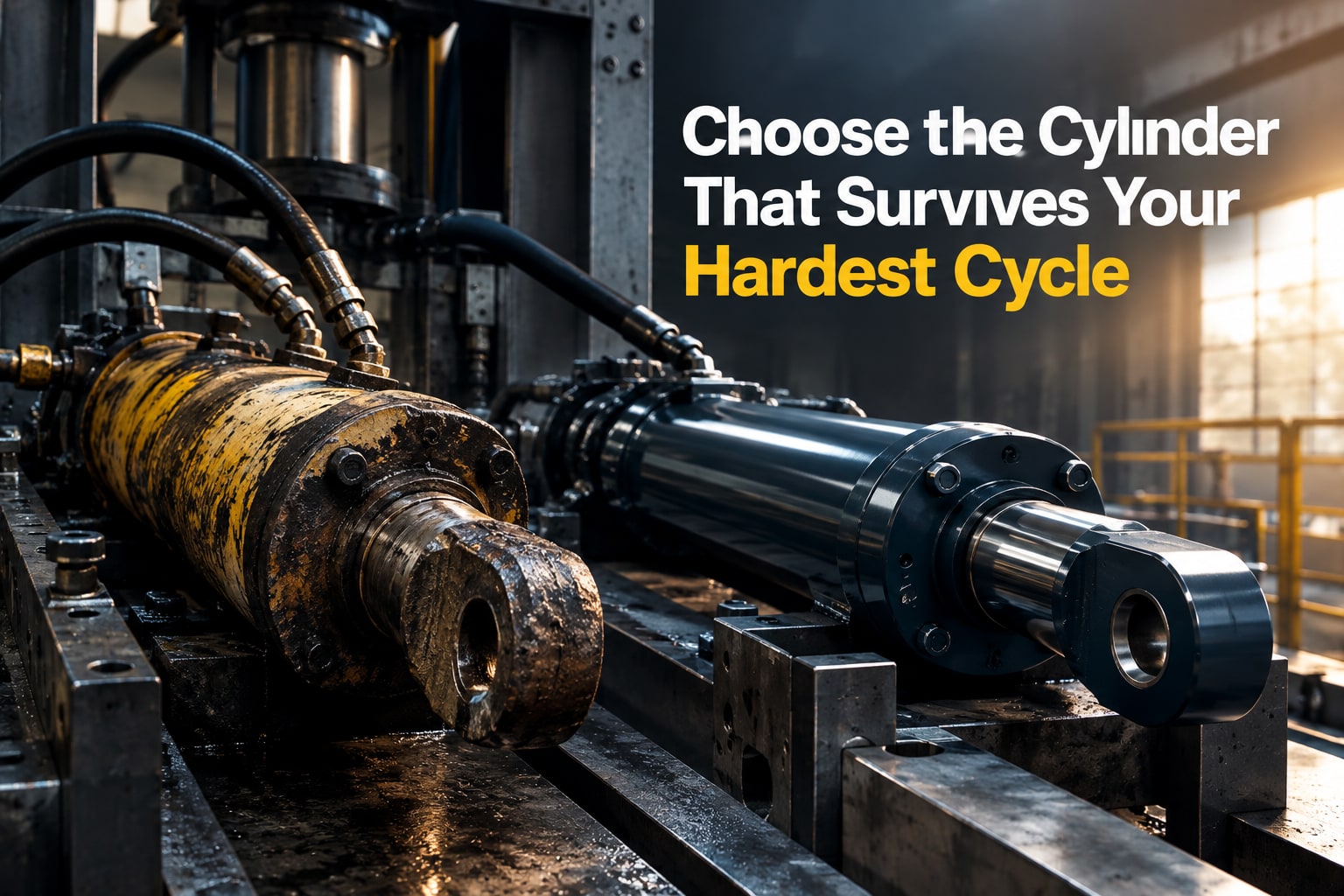
The label on a hydraulic cylinder does not tell you whether it will survive your pressure, stroke, alignment, cycle rate, fluid, or environmental demands. By comparing force, dimensions, duty, guidance, controls, and verification requirements, you can decide when a standard heavy-duty cylinder is the economical choice and when a special design is justified.
Key takeaways
- Choose heavy-duty cylinders for high loads, fatigue life, or frequent cycling.
- Choose special cylinders for unusual packaging, mounting, temperature, sensing, or synchronized motion.
- Size the bore and rod from force, stroke, pressure, buckling, and available space.
- Specify seals, sensors, controls, and end-of-stroke energy with the cylinder design.
Heavy-duty and special cylinders solve different problems
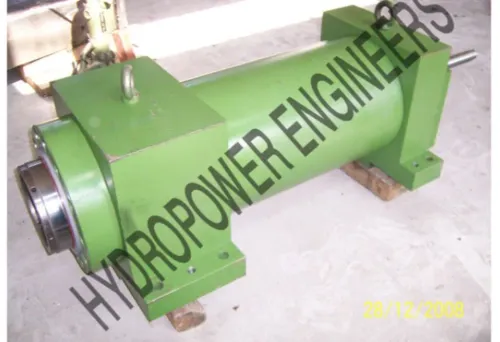
A heavy-duty hydraulic cylinder is selected for demanding load, pressure, fatigue life, or cycle frequency. A special hydraulic cylinder is designed around a constraint the standard range cannot accommodate, such as telescopic packaging, unusual mounting, servo positioning, corrosion, extreme temperature, or synchronized motion. “Special” describes adaptation, not a pressure class.
In a heavy duty hydraulic cylinder versus special hydraulic cylinder in Chennai comparison, use the application—not the label—as the decision point.
| Option | Practical advantage | Main trade-off |
|---|---|---|
| Heavy-duty standard cylinder | Known envelope, mounting dimensions, spare parts, and established ratings | Less freedom for unusual stroke, ports, sensing, or packaging |
| Special cylinder | Solves a defined interface, space, environment, or control problem | More design validation, documentation, lead time, and replacement-part risk |
| Tie-rod or welded design | Tie-rod units aid field disassembly; welded units allow compact, customized mounts and ports | Neither construction automatically proves higher durability |
A special hydraulic cylinder comparison should check force, working pressure, stroke, retracted length, speed, cycle frequency, side load, mounting loads, accuracy, environment, service access, and required life. Ask for continuous, intermittent, proof, burst, and fatigue ratings; “heavy duty” is not a globally controlled class.
ISO 6022 covers a 25 MPa mounting series, while ISO 6020-2 covers 16 MPa, but those standards do not replace application verification. Chennai location matters only through explicit requirements such as washdown, corrosion, storage, and local service conditions.
Size the cylinder from force, stroke, and available space
Calculate required cylinder area from peak load and working pressure, not from nominal tonnage. Use A = F ÷ P: force in newtons, pressure in pascals, and area in square metres.
At 200 kN and 160 bar (16 MPa), the theoretical area is 0.0125 m², equivalent to a 126 mm bore before losses or design margin.
That result applies to extension, where the full piston area acts. Retraction uses annular area: A = π(D² − d²) ÷ 4, so rod diameter reduces pulling force and changes speed. A cylinder selected from cap-end force can therefore be undersized for a pulling load.
- Convert the peak external load into newtons, including tooling weight and friction.
- Divide the required force by the cylinder’s rated working pressure at the cylinder, after valve and pipe losses.
- Select the next available bore and calculate the rod diameter from compressive load and buckling risk.
- Set the stroke from required travel, then check the mounting center-to-center dimensions.
- Check retracted length, port position, rod clearance, and installation space before approving the envelope.
Add a documented margin for friction, shock, fatigue, and the consequence of failure. Then verify flow: extension speed equals flow divided by piston area, while retraction uses annular area. This calculation is the starting point for hydraulic cylinders for industrial machinery, whether standard or specially configured.
Check duty cycle, buckling, side load, and end-of-stroke energy
Reliability depends on the cylinder’s load direction, pressure history, cycle frequency, unsupported rod length, side load, speed, and stopping energy—not on bore size or the “heavy duty” label alone. A heavy duty hydraulic cylinder in Chennai still needs explicit requirements for washdown, corrosion, storage, temperature, and local seal service.
| Condition | What to verify | Failure if ignored |
|---|---|---|
| Duty cycle | Continuous and intermittent pressure, cycles per hour, stroke life, fatigue rating, and relief-valve setting | Repeated pressure peaks fatigue the barrel, rod, mounts, or welds |
| Buckling | Compressive load, unsupported rod length, rod diameter, end-mount geometry, and safety factor | A slender rod bends, then scores the seal or jams the piston |
| Side load | Load direction, guide arrangement, bearing length, and allowable rod-bearing load | The rod and gland wear rapidly; do not use the cylinder as a machine guide |
| End-of-stroke energy | Moving mass, velocity, trapped-fluid volume, back pressure, cushion adjustment, and external shock absorption | The piston strikes the head, damaging cushions, mounts, and seals |
Calculate impact energy with E = ½mv², then confirm that the internal cushion can dissipate it at the actual speed. A cushion throttles fluid near the limit; it is not a replacement for an external shock absorber when inertia is high.
Specify the mounting loads and guidance separately. A long-stroke cylinder may need a larger rod, lower compression load, altered mounting, or an external guide; increasing hydraulic pressure will not prevent buckling. Ask for proof-test, burst-pressure, fatigue-duty, and mounting ratings before approving the design.
Specify pressure, seals, sensing, and control performance together
A special cylinder earns its extra engineering when a standard unit cannot meet a stated fluid, temperature, positioning, cleanliness, or motion requirement. “Special” describes the application or design, not a pressure class; a telescopic cylinder may be less heavily loaded than a conventional industrial cylinder.
In a special hydraulic cylinder comparison, specify these performance requirements together:
- Pressure and seals: State working pressure, relief-valve setting, proof-test pressure, fatigue duty, and required life. Match the seal compound to the hydraulic fluid, temperature range, pressure, speed, and contamination; the wrong seal can leak or harden before the barrel shows damage.
- Fluid and temperature: Identify mineral oil, water-glycol, fire-resistant fluid, or another medium, plus minimum and maximum operating temperatures. Compatibility affects seals, coatings, rod materials, and service intervals.
- Positioning and control: Require accuracy, repeatability, response time, and allowable drift—not merely a magnetostrictive sensor. Mechanical compliance, oil compressibility, structural deflection, valve resolution, temperature, and entrained air determine whether feedback produces usable motion.
- Cleanliness: Set a target ISO 4406 cleanliness code and filtration or flushing procedure. Servo and proportional valves can suffer particle damage long before visible cylinder damage.
- Synchronized motion: Specify the position error between cylinders, synchronization speed, load sharing, and fault response. A standard on/off circuit cannot deliver coordinated motion without suitable feedback and control architecture.
These requirements matter for hydraulic cylinders for industrial machinery when a missed position, seal failure, contaminated valve, or uneven movement can damage the product or machine.
Compare standardization with custom engineering before you buy
Choose the standard heavy-duty cylinder when its envelope, mounting, pressure, stroke, and service life match the application. Choose custom engineering when packaging, sensing, fluid, temperature, synchronization, or access requirements force a deviation; otherwise you pay for validation without removing a real constraint.
| Option | Standard heavy-duty cylinder | Custom cylinder |
|---|---|---|
| Envelope and mounting | Known dimensions and established mounts | Adapted ports, mounts, retracted length, or rod position |
| Procurement | Repeatable seals, rods, and spare parts | Application-specific parts and higher replacement risk |
| Engineering effort | Faster selection and less design validation | More calculations, drawings, testing, and lead time |
| Construction | Tie-rod or welded design selected from a series | Either construction altered for loads, access, or packaging |
In a heavy duty hydraulic cylinder versus special hydraulic cylinder in chennai comparison, judge the verified duty specification, not the label. A custom hydraulic cylinder manufacturer in chennai, including Hydropower Engineers, should document:
- Continuous, intermittent, proof, and fatigue pressure ratings; ISO 6022 or ISO 6020-2 dimensions where applicable.
- Bore, rod, stroke, mounting loads, buckling calculation, side-load limits, cushion performance, and expected cycle life.
- Dimensional inspection, leakage, pressure, and functional tests under ISO 10100, plus sensor calibration and cleanliness evidence when specified.
- Seal material, corrosion protection, fluid compatibility, traceability, and the part numbers and availability of replacement seal kits.
Related products
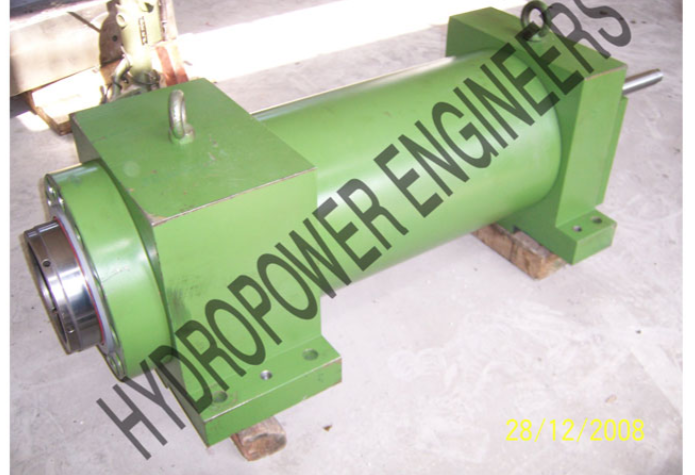 | Hydraulic Cylinders Hydropower Engineering Systems offers robust and high-performance High Tonnage Hydraulic Cylinders designed to deliver exceptional linear force for... View product → |
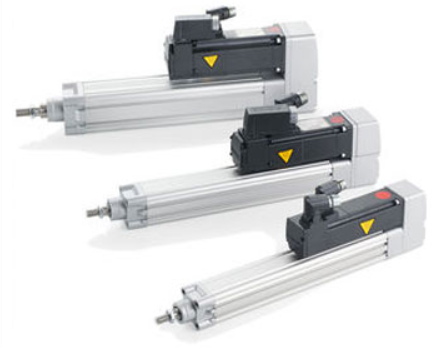 | Hydraulic Cylinders Depending on the requirements in terms of accuracy, servo cylinders are used with two construction designs, which differ in terms of the bearing of... View product → |
Frequently asked questions
What is the difference between a heavy-duty and a special hydraulic cylinder?
A heavy-duty cylinder is built for demanding load, pressure, fatigue life, or cycle frequency. A special cylinder adapts to a constraint such as telescopic packaging, unusual mounting, corrosion, extreme temperature, servo positioning, or synchronized motion.
How do you size a hydraulic cylinder for industrial machinery?
Start with required force and stroke, then check operating pressure, bore area, rod diameter, retracted length, installation space, and buckling risk. Include the load direction and any side load in the calculation.
What should you check besides pressure and stroke?
Check duty cycle, fatigue life, rod buckling, side loading, cushioning, end-of-stroke energy, seal compatibility, temperature, sensing, and control response.
When should you choose a custom hydraulic cylinder?
Choose custom engineering when a standard cylinder cannot meet the required envelope, mounting, stroke, corrosion resistance, temperature range, position feedback, synchronization, or control performance. Compare the engineering and lead-time cost against adapting the machine around a standard model.
Related product
 | Hydraulic Cylinders Hydropower Engineering Systems offers high-performance Telescopic Cylinders, also known as multistage hydraulic cylinders, designed for applications... View product → |