A hydraulic manifold controls and distributes working fluid, while a bell housing aligns and protects the motor-pump drive. By separating their jobs, checking the right dimensions and standards, and specifying both components from the machine’s real duty cycle, you can avoid leaks, alignment failures, contamination faults and difficult maintenance.
Key takeaways
- Match manifold passages, valves and ports to the hydraulic circuit.
- Specify bell-housing bore, shaft alignment and mounting dimensions together.
- Show ports, materials, tolerances and test requirements on both drawings.
- Compare Chennai suppliers by machining control, inspection records and service response.
What a manifold does and what a bell housing does
A manifold routes hydraulic fluid; a bell housing aligns and protects rotating power transmission. In special purpose machine hydraulic components, the manifold is a machined block with drilled passages that replaces multiple hoses, tees and adapters.
It sends pressure, return, pilot and drain flows between the pump, valves, actuators and gauges, reducing plumbing length and leak points. A blocked passage or drilling error can disable several functions at once.
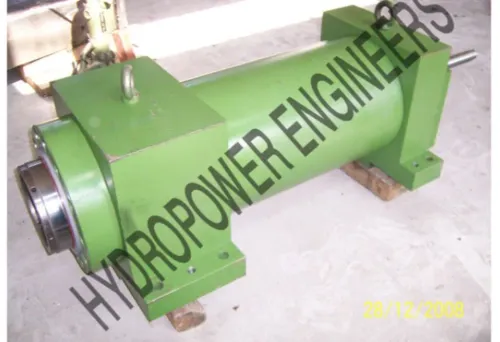
A bell housing is a mechanical enclosure, not a hydraulic control block. It aligns a hydraulic pump or motor with a gearbox, engine or machine frame, transmits torque through a correctly matched coupling, guards rotating parts and prevents damaging shaft or bearing loads.
| Component | Main job | What to check |
|---|---|---|
| Manifold | Routes fluid through drilled passages | Flow, pressure, valve functions, port paths and test points |
| Bell housing | Aligns and guards the pump or motor drive | Flange, pilot, shaft, coupling, concentricity and misalignment |
These different manifold bell housing applications demand different inspections. Select the manifold for circuit flow, pressure and valve operation; select the bell housing as a matched mechanical assembly. Confirm its flange and pilot fit, shaft and coupling dimensions, concentricity, allowable radial and angular misalignment, and access for coupling inspection.
A correct hydraulic circuit cannot compensate for a misaligned drive.
Where these components work together in special purpose machines
A manifold and bell housing earn their space when one compact power unit must drive several repeated machine duties. These manifold bell housing applications connect hydraulic sequencing at the tooling with protected motor-pump drive at the frame.
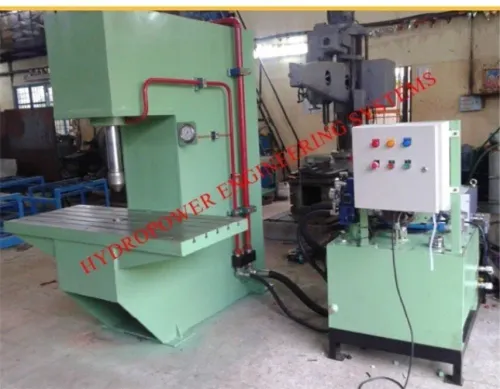
1. In a press, the manifold combines directional, pressure-control and flow-control valves to clamp the workpiece, build holding pressure and move the ram in the correct sequence. The bell housing keeps the motor-pump assembly short and guarded inside the press frame.
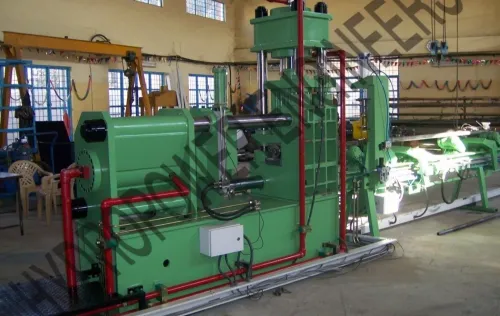
2. Tube end-forming machines use a manifold to coordinate clamping, feeding, punching, bending or end-forming tools close to the work area. This is where hydraulic manifold applications in chennai commonly suit compact fabrication equipment: fewer remote hoses mean less plumbing around moving tooling.
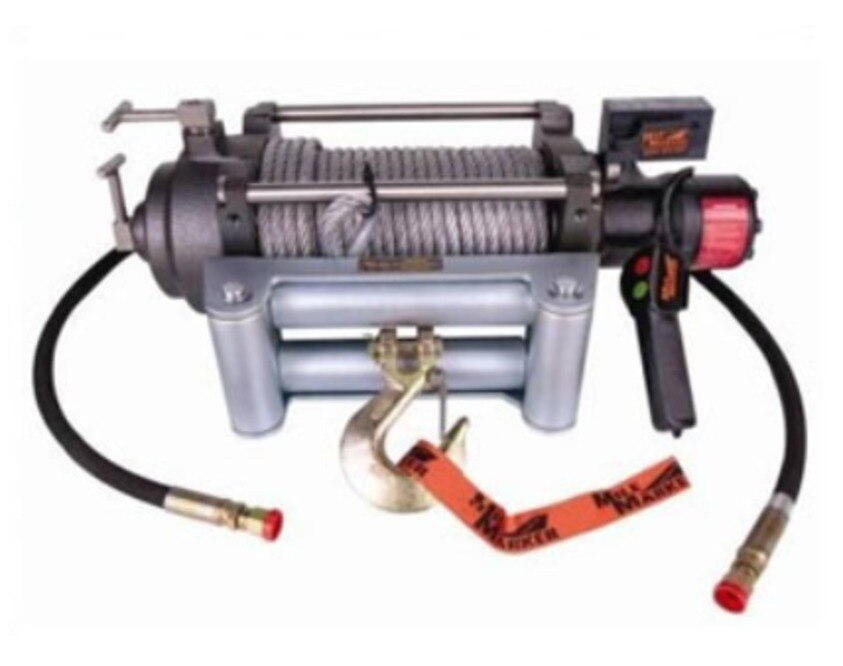
3. Material-handling equipment and winches need controlled lifting, lowering and counterbalance functions. Counterbalance valves prevent a suspended load from running away, while directional and flow-control valves regulate movement.
4. Rotary units use a bell housing to package the motor and pump in a compact frame, while the manifold distributes power to the rotary actuator. Dedicated assembly and testing machines use the same arrangement for repeated clamp, punch and fixture cycles.
5. An enclosed package saves floor space but demands inspection access, coupling-replacement access, ventilation and heat management. Short pressure peaks repeated thousands of times require checks for fatigue, vibration and transient pressure in the block, cavities, mounts and fittings—not only nominal working pressure.
How to select a manifold without creating a hydraulic fault
Specify the manifold from the actual schematic and valve envelope, not from an older block. This approach matters across hydraulic manifold applications in Chennai and other locations because special purpose machine hydraulic components often combine several functions.
1. Ask for working and peak pressure, fluid type, viscosity range, flow rate for every function, and the flow combinations that occur simultaneously. A block that passes single-function testing can stall when clamping and ram movement share flow.
2. Confirm each valve cavity pattern, including cartridge-valve geometry and ISO 4401 mounting pattern where applicable. Record port size, port location and circuit function before machining.
3. Identify every connection standard: SAE ports, metric ports, O-ring face seals, BSPP threads or NPT threads. Mixing standards causes poor sealing, damaged threads, leaks and replacement parts that cannot interchange.
4. Check the mounting envelope, service access and plugged spare ports. Add test points near critical functions and a pressure reading downstream of the pump outlet; comparing both readings reveals manifold pressure loss, blocked return flow or clamp-pressure decay.
5. Require deburring, flushing and cleanliness verification. Cross-drilled passages can retain chips, seal fragments and flushing fluid, making proportional valves, cartridge valves and small orifices stick.
6. Treat the finished manifold as a pressure-containing hazard. Guard moving parts, provide blocking provisions and follow lockout procedures; enclosing plumbing does not prevent unexpected actuator movement or trapped pressure.
What to put on the manifold and bell-housing drawings
A nominal motor flange is not enough to specify a bell housing. The pump shaft, coupling bore, key, hub length and axial engagement must form a matched assembly; poor alignment causes coupling wear, seal leakage, bearing loads and vibration. Check suction-line size, inlet bends, suction lift and strainer restriction separately because cavitation can occur independently.
Give the supplier a drawing that answers these points:
- Manifold: include the hydraulic schematic, numbered ports, flow direction, material, surface finish, pressure-test method and acceptance pressure, cartridge-valve cavities, cross-drilled and plugged passages, mounting holes, test connections, cleaning standard and identification marks.
- Bell housing: specify motor frame and flange dimensions, pump mounting standard, pilot registers, bolt-circle dimensions, shaft diameter, key and coupling clearances, axial engagement, wall thickness, material, corrosion protection, inspection access, mounting orientation, drainage or ventilation provisions, concentricity requirement, allowable radial and angular misalignment, and any dynamic-balance or vibration limit.
These details let a supplier produce a usable component instead of a generic quotation. They also make comparison practical when sourcing manifolds and bell housings for special purpose machines in Chennai, where humid or washdown conditions can affect finishes, fasteners and drainage.
Treat the drawing as the control document for special purpose machine hydraulic components, not as a sketch of the motor flange.
How to make the right Chennai sourcing decision
Ask the supplier to review the machine installed in Chennai, not recycle an earlier block. For manifolds and bell housings for special purpose machines in Chennai, the environment matters: specify corrosion-resistant materials or coatings, sealed electrical interfaces, suitable fasteners and drainage for humidity, washdown or outdoor exposure.
- Ask whether the review uses the actual hydraulic schematic, simultaneous-flow cases, valve envelope and machine frame. Confirm pressure, flow, standards, dimensions and alignment before quotation.
- Request approval drawings showing every cavity and port, passage identification, mounting interfaces, coupling access, drainage and ventilation. Require documented pressure testing, cleaning and flushing records, and a replacement plan for wearing couplings and seals.
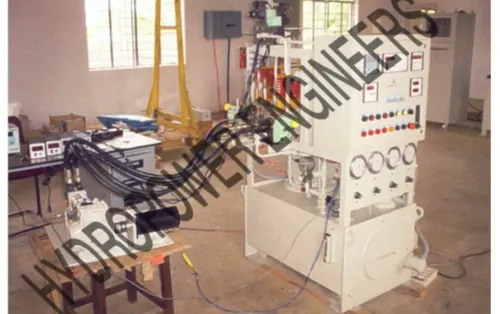
- Match the supplier’s evidence to the duty. Hydraulic manifold applications in Chennai include presses, tube-processing machines, material-handling equipment and test rigs, where unusual sequences must fit tight envelopes. A custom manufacturer earns consideration when standard blocks cannot provide that combination.
- Evaluate Hydropower Engineers through manifold and bell-housing drawings, interface checks and commissioning support, not a generic “high precision” claim.
Pre-order checklist: flow for each simultaneous function; working and peak pressure; port, cavity and electrical standards; overall dimensions; flange, shaft and coupling alignment; cleanliness and flushing acceptance; inspection and replacement access. A compact package that cannot be opened, drained or serviced will cost more during production than it saved at purchase.
Related product
 | Special Equipments Hydropower Engineering Systems specializes in the design and manufacture of high-precision Manifolds and Bell Housings, engineered for seamless... View product → |
Frequently asked questions
What does a manifold do in a special purpose machine?
A hydraulic manifold routes fluid through drilled passages and mounted valves, replacing multiple hoses, tees and adapters while reducing connection points.
What does a bell housing do?
A bell housing aligns and protects the connection between a motor, pump or gearbox and the driven machine, while containing rotating power-transmission components.
How do manifolds and bell housings work together?
The manifold controls hydraulic flow near the actuator or power unit, while the bell housing maintains mechanical alignment between the drive and hydraulic pump.
What should a manifold drawing include?
Include every port designation, passage size, valve cavity, thread standard, material, surface finish, sealing method, tolerance, pressure rating and inspection requirement.
How should you choose a Chennai supplier for these components?
Compare suppliers on drawing review, CNC machining capability, pressure testing, dimensional inspection, material traceability and after-sales support for your machine.