A usable specification must connect force, chamber size, cycle time, waste characteristics and operator controls; pressure alone is not enough. By the end, you can calculate the capacity you need, define a checkable machine schedule, screen unsuitable waste and compare suppliers without confusing volume reduction with mass reduction.
Key takeaways
- Measure waste density and output condition before selecting capacity.
- Specify cylinder force, stroke, cycle time, controls and guarding.
- Calculate throughput, motor power, container fit and electrical demand.
- Require containment, interlocks and safeguards for hazardous waste streams.
Start with waste data, not a claimed compaction ratio
Define compactor capacity requirements from measured waste density and a specified output condition—not a claimed “five-to-one” ratio. State whether capacity means packed chamber volume, container payload, bale or drum mass, or tonnes per hour; these measures are not interchangeable.
Run a trial with representative mixed commercial waste, wet organics, cardboard and metal-containing waste. Record input mass, output mass, chamber volume and final density after using the same loading and unloading method planned for production. A high pressing force does not guarantee useful output.
Wet material can release more liquid, creating leakage and sanitation failures without sealed or sloped surfaces, controlled leachate drainage, clean-out access and chemically compatible seals.
Before selecting a hydraulic waste compactor machine, document:
- Incoming bulk density in kg/m³ and its variation by material
- Daily waste mass, peak load and number of drums
- Drum diameter, drum height, target bale or drum dimensions, and receiving-container limit
- Loading method, operator time, cleaning time and required operating shifts
- Required final density, payload mass and tonnes per hour
Estimate practical throughput as chamber volume × cycles per hour × incoming bulk density × utilization factor. Set the utilization factor below 1.0 for incomplete filling, loading delays, ram return, door operation and cleaning.
A pump’s theoretical cycle rate otherwise overstates hourly capacity and can leave the receiving vehicle overweight even when the cylinder still has available force.
The hydraulic and mechanical specification buyers should require
Require a data sheet that makes force, speed, capacity and installation loads checkable. “High-pressure hydraulic system” is not a specification. Industrial hydraulic compactor specifications must state rated pressing force in kN or tonnes alongside maximum and normal working pressure in bar or MPa; pressure alone does not reveal force.
Ask for these hydraulic figures:
- Cylinder bore, rod diameter and stroke; extension and retraction speeds
- Pump type, displacement or flow rate, relief-valve setting, reservoir volume and filtration rating
- Motor power in kW, duty cycle and starting-current requirement
- Platen dimensions, chamber dimensions, cycle time, machine footprint and total mass
A 100 mm-bore cylinder at 210 bar produces about 165 kN on extension, using pressure × piston area. Retraction force is lower because the rod reduces piston area. At 210 bar and 30 L/min, hydraulic output is about 10.5 kW; select the motor after allowing for pump, valve, motor and mechanical losses.
| Figure | Require it as | Why it prevents a misleading comparison |
|---|---|---|
| Chamber capacity | Chamber volume, container volume or payload mass | These measures are not interchangeable |
| Output | Bale mass, drum dimensions or tonnes per hour | “Capacity” otherwise has no defined endpoint |
| Mechanical strength | Peak frame reaction, floor loading and anchor details | Empty machine weight does not predict foundation demand |
| Transfer fit | Container alignment tolerance and sliding or overturning loads | A ram can shift an underspecified receiving container |
Require a representative-material trial recording input mass, output mass, chamber volume and final density.
Calculate throughput, power and site-fit before ordering
A 1.2 m³ chamber running eight cycles per hour with waste density of 250 kg/m³ has a theoretical output of 2,400 kg/h. Apply a 0.65 utilization factor for incomplete filling, loading, ram return, door operation and cleaning: realistic throughput is 1,560 kg/h, not 2.4 tonnes.
1. Define your compactor capacity requirements in tonnes per hour and per shift. Record chamber volume, measured incoming density, cycle time and the required output condition. Confirm whether the supplier’s “capacity” means chamber volume, payload mass, bale mass or tonnes per hour.
2. Test representative waste, including wet material or metal-containing loads if they will enter production. Weigh input and output, record final density and measure the compressed dimensions; a claimed five-to-one reduction is meaningless unless it states whether the ratio describes height, external volume or packed volume.
3. Convert hydraulic data into power: hydraulic power in kW equals pressure in bar multiplied by flow in litres per minute, divided by 600. Specify normal and maximum pressure, relief-valve setting, pump flow, cylinder bore and stroke, extension and retraction speeds, reservoir volume, filtration and motor rating; allow for hydraulic and motor losses.
4. Check site fit before approval. Draw the machine footprint, loading-door swing, container or vehicle position, maintenance clearance, floor loading, electrical supply, drainage and ventilation. Require the duty cycle, oil grade, viscosity range, maximum oil temperature and cooling method; Chennai installations need protection against heat, dust and corrosion.
Compare hydraulic compactor specifications in Chennai by these figures, not by “high pressure” claims.
Specify loading, containment and hazardous-waste safeguards
Treat containment as a load case, not an accessory. Specify the frame, floor anchors and receiving container for peak ram reaction, including permissible floor loading, anchor size and embedment, container alignment tolerance, and resistance to sliding or overturning during ram extension.
Require these loading and containment details:
- State the drum diameter, height, mass and orientation the loading door accepts; interlock the door so the ram cannot move while it is open.
- Use a sealed receiving container with a gasketed lid, drain pan and leachate outlet leading to a closed collection tank.
- Fit a corrosion-resistant chamber, washdown points and a cleanable sump for wet waste; never allow free liquid to escape beneath the machine.
- Enclose dusty or contaminated loading and specify extraction, filtration and pressure direction from the operator; add a HEPA stage when the hazard assessment requires it.
A hydraulic waste compactor machine must identify exclusions such as pressurised cylinders, gas bottles, batteries, aerosols, unemptied chemical drums and unknown containers. A punctured drum can release vapour or liquid before the ram reaches full force.
For radioactive material, prohibit routine compaction unless the radiation-protection officer and governing regulator approve a written procedure. Require shielded equipment, remote loading and operation, contamination surveys, airborne-contamination controls, dose monitoring and a waste package rated for the resulting activity and pressure. Compaction can rupture a source and concentrate contamination.
Make these safeguards part of the industrial hydraulic compactor specifications, not promises in a commissioning note. Witness a trial with representative drums and wet waste, recording leakage, door interlocks, container fit and post-cycle contamination.
Choose the right compaction method and verify the supplier
Choose a hydraulic compactor when you need repeatable force to reduce loose industrial waste or intact containers into a controlled package, especially across multiple shifts. It is not automatically the best choice:
| Option | Prefer it when | Main limitation |
|---|---|---|
| Hydraulic compactor | You need adjustable force, defined platen travel and dense output from drums, filters or mixed waste | Requires hydraulic heat management and containment controls |
| Drum crusher | The feed is mainly empty steel drums and fast flattening is the only goal | Poor fit for mixed waste or controlled final dimensions |
| Baler | Fibrous, recyclable material must leave as tied bales | Unsuitable for rigid drums and some contaminated loads |
| Mechanical compactor | Waste is loose, regular and continuous in a hopper or transfer station | Less control over force and dense package shape |
| Shredder | You must destroy or size-reduce material before downstream processing | Creates dust, noise and a more difficult-to-contain stream |
| Direct disposal | Waste volume is low, non-compressible or prohibited by the machine’s feed list | Pays transport and disposal costs without volume reduction |
Compare hydraulic compactor specifications in Chennai by force, platen and chamber dimensions, cycle time, feed exclusions, and whether capacity means chamber volume, payload, bale mass or tonnes per hour. A claimed one-fifth reduction does not define the final package or legal vehicle payload.
A search result calling a firm a hydraulic compactor manufacturer in Chennai proves neither local fabrication nor service readiness. Verify:
- Fabrication location, commissioning responsibility and technician response time
- Critical-spares stock, cylinder seals, warranty exclusions and electrical compliance
- Duty cycle, oil grade, cooling method, maximum oil temperature, filtration and corrosion protection
- Pressure, cylinder force, motor rating and tested output under your waste mix
Hydropower Engineers should provide these checkable details before you compare its proposal with another supplier.
Related product
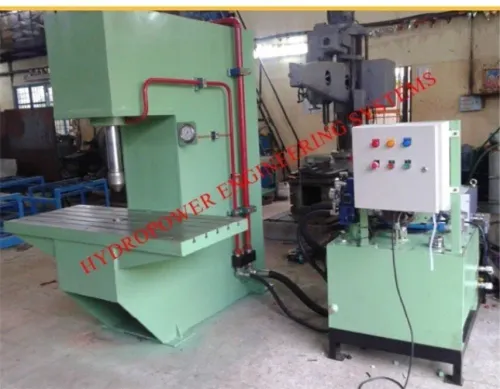
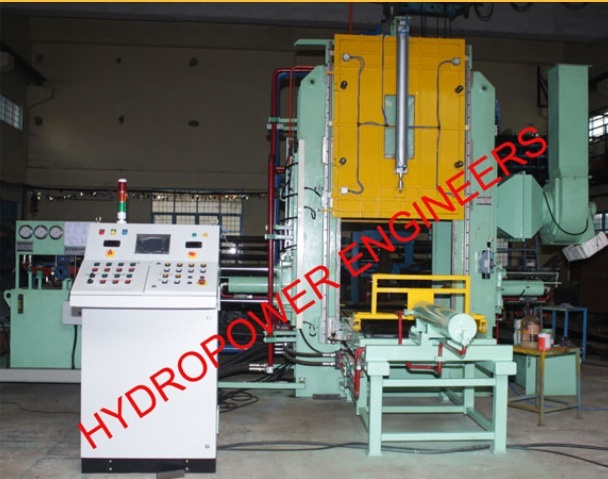 | Hydraulic Presses Compactor The Compactor is a specialized H-type hydraulic press designed to compress drums to one-fifth of their original size. |
Frequently asked questions
What does compactor capacity mean?
Capacity can mean packed chamber volume, container payload, bale or drum mass, or tonnes per hour. Specify the measure you need because these values are not interchangeable.
How should you calculate compactor capacity requirements?
Measure waste density, volume per shift and the required output condition, then calculate the mass and throughput the compactor must handle.
Which hydraulic and mechanical specifications should buyers require?
Request cylinder force, stroke length, cycle time, motor power, rated pressure, chamber dimensions, feed opening, control method, guarding and service access.
What safeguards are required for hazardous waste compaction?
Specify sealed containment, controlled loading, emergency stops, access-door interlocks, leak collection and compatibility checks for the waste, seals and chamber materials.
How do you verify a hydraulic compactor supplier?
Compare tested throughput under your waste conditions, inspect drawings and safety documentation, confirm service support, and witness a factory acceptance test before dispatch.