A servo cylinder can coordinate force, speed, position, and timing in TMT bar equipment, but its value depends on the complete hydraulic and control system rather than the cylinder alone. By the end, you will be able to compare actuator options, specify a suitable axis, identify safety and maintenance requirements, and judge whether closed-loop control fits your production duty.
Key takeaways
- Match cylinder force, stroke, speed, and duty cycle to the bar-processing operation.
- Use position, pressure, or force feedback when repeatability affects throughput or quality.
- Specify the valve, sensor resolution, safety response, and failure position together.
- Test accuracy, repeatability, response time, leakage, and emergency stopping before handover.
How a servo cylinder controls movement in TMT bar machinery
A machine command does not send oil directly to the cylinder. In a servo cylinder for TMT bar machinery, the controller converts the requested position, speed, or force into a motion profile, then compares that target with live feedback while the bar-processing cycle runs.
- The controller receives a command such as “advance 120 millimetres at 80 millimetres per second” or a force setpoint for roll-gap adjustment.
- A position transducer on the cylinder reports the actual rod position. A pressure sensor can add force feedback, while a line encoder supplies bar-speed or bar-position data when the actuator must follow a moving bar.
- The controller calculates the error between the target and measured value, then sends a continuously changing signal to the servo or high-response proportional valve.
- The valve meters hydraulic flow into either side of the cylinder. Flow direction controls movement; flow rate controls speed; pressure determines available force.
- Feedback returns to the controller repeatedly, allowing it to reduce error, limit overshoot, decelerate before reversal, and hold the commanded position.
The hydraulic power unit supplies pressurised oil, while the cylinder converts that flow into linear force. During feeding, cutting, bending, straightening, or forming, the controller can execute acceleration, working, return, and re-synchronisation phases instead of relying on a fixed stop.
Cylinder feedback alone does not reveal where the TMT bar is. A flying shear therefore needs a dependable line-speed or bar-position reference, and oil temperature control matters because viscosity changes alter valve response, leakage, friction, and tuning.
The process improvements that justify closed-loop control
The servo cylinder benefits for tmt bar equipment appear in the finished bar: repeatable position, controlled speed, regulated force, rapid reversal, and less overshoot. These improvements matter when the actuator must track a moving bar instead of simply extend to a fixed stop.
| Process | Closed-loop improvement | Production result |
|---|---|---|
| Cutting | Flying-shear motion follows line speed through acceleration, cut, return, and re-synchronisation | Cleaner cuts, lower reversal impact, fewer timing errors |
| Feeding | Pinch rolls and transfer mechanisms coordinate stroke and velocity with bar position | More consistent pitch and fewer feed collisions |
| Bending | The cylinder applies a programmed position or force profile | Repeatable bend angle with easier diameter and grade changes |
| Straightening | Roll gaps respond to measured position or force rather than shims alone | More uniform straightness across changing bar sizes |
| Forming | Speed and force change at defined points in the cycle | Better shape control and reduced tool shock |
A position sensor corrects cylinder error, but it does not measure the bar. Flying-shear control still needs a dependable line-speed encoder or bar-position reference. Force control also needs careful interpretation: pressure-based force estimates include piston-area ratio, friction, and trapped pressure. Use a load cell when the specified force applies at the tooling.
Repeatability at the cylinder will not overcome a flexible frame, roll eccentricity, backlash, poor alignment, or side loading. Verify those mechanical limits before attributing a bad bend, cut, or straightened bar to the controller.
Servo cylinders versus other actuators and simpler hydraulics
Choose a servo cylinder when the actuator must follow the bar, not merely reach a fixed end position. Its servo valve, position feedback, and controller coordinate force, speed, acceleration, and reversal, making servo actuator benefits valuable in flying shears, straighteners, pinch rolls, roll-gap adjustment, and transfer equipment.
| Option | What it means | When a servo cylinder provides more value |
|---|---|---|
| On/off hydraulic cylinder | Full flow or no flow; movement depends on stops and load | The cut, bend, or roll gap needs programmable positions, gentle reversal, or repeatable force |
| Proportional hydraulic cylinder | Variable flow, but limited feedback and tuning | The bar position changes during the cycle and you need closed-loop correction, synchronization, or recipe-based profiles |
| Hydraulic motor | Rotary torque and speed | A cylinder is better for direct linear force, short controlled strokes, or precise axial positioning |
| Ball-screw actuator | Efficient electromechanical linear motion | Hydraulic servo wins when peak force, shock loading, compact force density, or mill-scale exposure exceeds the screw system’s practical limits |
| Pneumatic cylinder | Low-cost compressed-air motion with compliance | Hydraulic servo wins when air compressibility would cause position error, force variation, overshoot, or inconsistent straightening |
A conventional proportional cylinder remains the better choice for uncomplicated positioning, lower cycle demands, and easier maintenance. Servo control adds valve cost, feedback hardware, tuning work, and stricter oil cleanliness; contamination can make the valve stick or lose null accuracy.
Do not choose it solely for speed. Pump flow, valve response, trapped air, hose compliance, load inertia, and structural resonance determine the result. The strongest servo cylinder industrial applications are those where synchronization and repeatability repay that added complexity.
How to specify the cylinder, valve, feedback, and safety functions
Calculate the load, motion profile, oil flow, and failure consequences before choosing a servo cylinder for TMT bar machinery. Bore size alone cannot establish usable force.
1. Document the machine load: required push and pull force, working pressure, effective piston area, rod strength, buckling load at full extension, side loads, mounting angles, stroke, and available installation space. Include friction, impact, eccentric bar loads, and a design margin.
2. Define the motion profile for each recipe: commanded position, speed, acceleration, deceleration, reversal time, cycle rate, dwell time, and synchronization with bar speed or line position. For a flying shear, cylinder feedback alone cannot locate the moving bar; add a line encoder or bar-position reference.
3. Specify the valve from peak and continuous flow demand, pressure drop, response bandwidth, leakage tolerance, oil viscosity range, and required control mode. Check that the hydraulic power unit, cooler, filtration, and accumulator can maintain pressure and flow during the fastest stroke.
4. Specify feedback by measuring location, stroke range, resolution, repeatability, update rate, and resistance to vibration and heat. A rod sensor measures actuator position, not roll gap or bar position; document any backlash, frame deflection, roll eccentricity, or compliance between them.
5. Separate motion control from safety. Record relief settings, pilot-operated checks, counterbalance valves, mechanical restraints, hose-burst protection, emergency-stop behaviour, and safe states for power or communication loss against ISO 4413 and the machine risk assessment.
Hydropower Engineers can use this calculation sheet to distinguish a genuine servo-cylinder requirement from a conventional cylinder with proportional control, while preserving the servo cylinder benefits for TMT bar equipment where repeatability and synchronized motion justify the added complexity.
Related product
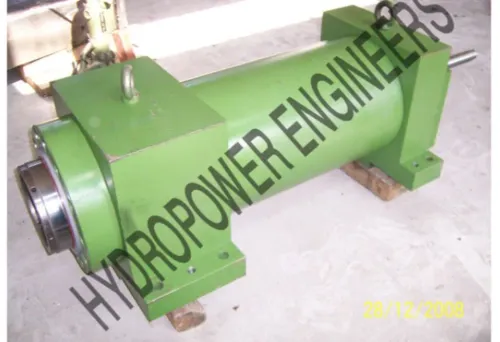
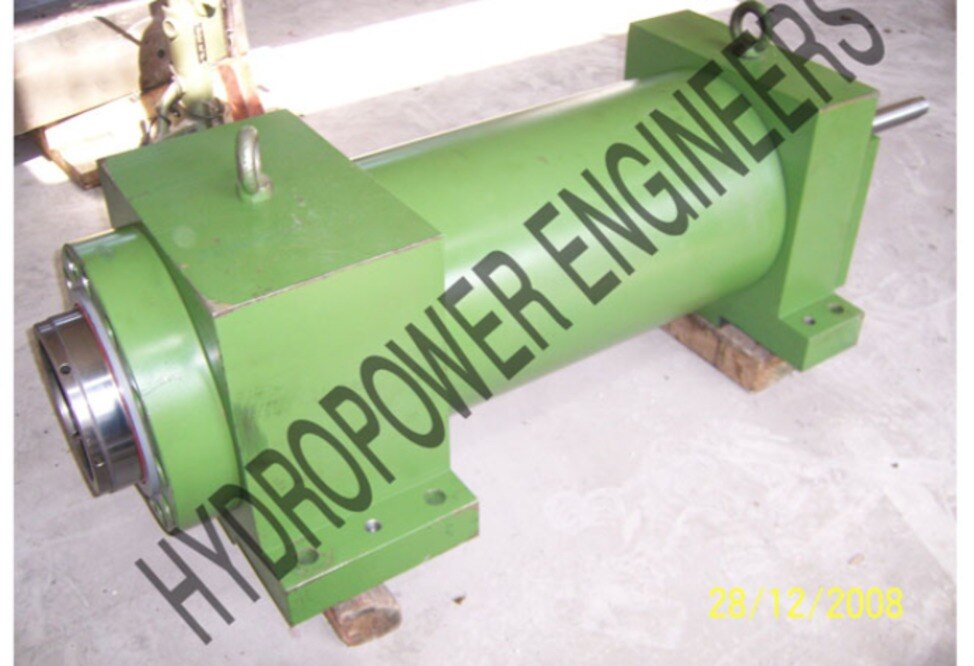
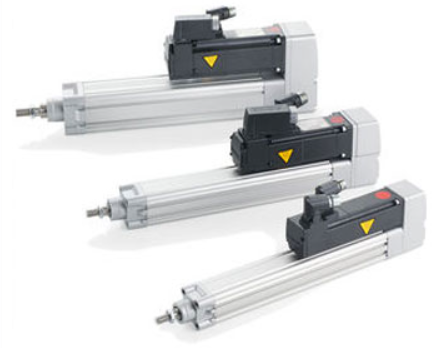 | Hydraulic Cylinders Depending on the requirements in terms of accuracy, servo cylinders are used with two construction designs, which differ in terms of the bearing of... View product → |
The operating trade-offs, maintenance checks, and acceptance tests
The main servo actuator benefits are repeatable motion and reduced reversal impact, but they do not make the system maintenance-free. Budget for the servo valve and commissioning time. A larger cylinder can increase force while reducing speed if pump capacity stays unchanged.
Oil temperature changes leakage and valve response, so long runs can shift tuning and position holding. In flying-shear service, cylinder feedback cannot track the bar; a failed line-speed reference can produce a perfectly controlled, mistimed cut.
These servo cylinder industrial applications need load-holding hardware and a separately validated safety function when a falling load creates danger.
- Check oil cleanliness against the valve manufacturer’s limit and replace the filter when differential pressure rises.
- Inspect the rod, seals, hoses, and fittings for leakage; lost holding force is a warning.
- Compare commanded and measured position with pressure and valve demand; rising demand or following error indicates a developing fault.
- Verify sensor zero, cable shielding, connector security, alignment, and oil temperature after maintenance.
Commission with the production load, not an unloaded dry cycle. Record results for these acceptance tests:
- Run repeated strokes across the specified speed and force range, confirming position error and reversal overshoot.
- Check synchronization against the actual bar-speed or line-position reference.
- Test power loss, hose failure, and emergency stop response against the risk assessment and ISO 4413.
- Repeat the cycle at cold and steady operating oil temperatures; reject drift that exceeds the agreed tolerance.
Frequently asked questions
How does a servo cylinder control movement in TMT bar machinery?
A controller compares the requested position, speed, or force with live feedback and adjusts hydraulic flow through a servo valve.
When do servo actuator benefits justify closed-loop control?
Closed-loop control earns its cost when the process needs repeatable positioning, controlled force, coordinated motion, or fast correction during each cycle.
How do servo cylinders compare with other actuators and simpler hydraulics?
Servo cylinders provide dynamic feedback and precise control, while standard hydraulic cylinders, electric actuators, and proportional systems may offer lower cost or simpler maintenance.
What should you specify and test before accepting a servo cylinder system?
Define the cylinder rating, valve, feedback device, safety functions, operating limits, and acceptance tests for accuracy, repeatability, response, leakage, and stopping.