A C-frame press and a squeeze bending machine apply force in different ways, use different tooling, and produce different results on sheet, tube, channel, and profile sections. By comparing motion, force, alignment, bend quality, tooling, utilities, and acceptance tests, you can specify the machine that fits your Bangalore production work rather than selecting by tonnage or catalogue name.
Key takeaways
- Match the machine to part geometry, bend radius, and production volume.
- Calculate working force at the tool, not only the press nameplate tonnage.
- Control springback and ovality with tooling, support, and repeatable settings.
- Specify a documented factory acceptance test before buying in Bangalore.
How a C-frame press differs from squeeze bending
A C-frame press uses a vertically moving ram to push a workpiece against a die, with the open throat providing access from three sides. It is a general-purpose machine for punching, piercing, embossing, straightening, and press forming; its tooling determines the bend shape.
A squeeze bending machine normally presses a tube, channel, or profile between shaped tooling and around a fixed former. It does not rotate the tube around a rotary draw die. The result depends on compression, support, and the contact surfaces, so flattening, wall thinning, wrinkles, and end flare must be checked on sample parts.
| Option | Motion and tooling | Resulting work |
|---|---|---|
| C-frame press | Descending ram with replaceable upper and lower dies; workpiece rests on a bolster | Flexible forming, but bend radius and repeatability depend heavily on die design, alignment, stroke, and deflection |
| Squeeze bending machine | Tube is compressed against a fixed former with pressure tooling and support | Repeated bends in defined tube or profile envelopes, with geometry controlled by the tooling arrangement |
Before comparing a c frame press or squeeze bending machine bangalore quotation, follow this process:
- Ask the supplier to name the method: compression bending, press bending, rotary draw, roll bending, or hybrid.
- Request a tooling drawing showing the bend die or former, pressure die, clamp, mandrel, and tube support.
- Specify outside diameter, wall thickness, material grade, bend-centreline radius, angle, and allowable ovality.
- Treat any squeeze bending machine bangalore listing without a tooling envelope and sample-part measurements as incomplete.
Choose the machine by part geometry and production task
Choose the machine that matches the section and bend pattern, not the label in a quotation.
| Machine | Best fit | Choose another machine when |
|---|---|---|
| C-frame hydraulic press | Punching, piercing, embossing, straightening, shallow forming, and occasional press bending in low-to-medium volumes | You need deep drawing, sustained off-centre loading, or dedicated high-speed tube bending |
| Squeeze bending machine | Repeated large-radius bends in tubes, channels, or profiles with simple geometry and lower tooling cost | The part needs a tight radius, low ovality, or precise cosmetic control |
| Press brake | Straight bends in sheet, plate, angle, and open profiles using sequential tooling stations | You need a continuous tube bend or a closed, tightly controlled tube radius |
| Rotary draw bender | Tight-radius tube work with consistent bend angle, appearance, and section shape; add a mandrel and wiper for demanding parts | Large-radius, simple bends do not justify its tooling and setup cost |
| Roll former | Long, continuous profiles with repeated bends along the length, such as channels, tracks, and sections | You are making short parts with isolated bends or changing geometries |
A C-frame hydraulic press is general-purpose metal forming machinery, not automatically a tube bender. A search for c frame hydraulic press bangalore does not establish the process: ask whether the quoted machine uses compression bending, rotary draw, press bending, roll bending, or a hybrid.
Require a tooling drawing that identifies the bend die or former, pressure die, clamp, mandrel, wiper, and tube support. For repeatable dimensions, compare programmable overbend, closed-loop ram or carriage position, proportional hydraulics, and stored recipes—not pressure rating alone.
Calculate usable force instead of comparing nominal tonnage
A 100 mm-bore cylinder at 250 bar produces about 196 kN, or 20 tonnes-force, before seal, valve and mechanical losses. Use F = pA as the starting point, not the advertised tonnage.
The required force rises with material yield strength, wall thickness, section width and the amount of deformation; a wide channel or closed profile demands more than a small tube.
Tooling changes the answer again. A tight bend radius, blunt punch, high-friction die or large contact area can consume force without improving the part. Calculate the forming load for the actual material grade and section, then apply a stated margin.
Check the cylinder’s forward force separately from its lower return force, because the rod reduces return-side piston area.
Stroke and geometry decide whether that force reaches the work. Compare usable force at the required stroke, daylight, shut height, throat depth and tool height. A nominally identical machine can fail when the die sits too low, the ram reaches its limit, or off-centre loading deflects the C-frame.
For a c frame hydraulic press Bangalore purchase, require these figures in writing:
- Material grade, thickness, section dimensions, bend radius and tooling used for the load calculation
- Bore, rod diameter, rated pressure, forward and return force, and force available at each stroke position
- Stroke, daylight, shut height, throat depth, bolster size and cylinder position
- Allowable off-centre load, frame deflection, pump flow and cycle time
- Closed-loop ram position, proportional or servo hydraulics, pressure transducer and recorded stroke repeatability
That is a useful hydraulic press comparison: pressure control alone does not guarantee identical dimensions when thickness, yield strength, friction or bottom-dead-centre position changes.
Control radius, springback, ovality, and repeatability in tube work
Start with the tube’s outside diameter, wall thickness, material strength and required centreline radius; machine tonnage alone will not prevent cracking or wall thinning. A radius that is too tight for the material concentrates strain, while an unsupported tube wrinkles, flattens and develops excessive ovality.
Specify the complete tool set for the production tube:
- Bend die matched to the outside diameter and centreline radius
- Clamp die and pressure die with full contact and correct clearance
- Mandrel when the wall is thin, the radius is tight or ovality is restricted
- Wiper die when the tube tends to wrinkle at the inside tangent
- Replaceable supports and wear parts for consistent changeover
Control the process by ram or carriage position, not pressure alone. Program overbend to recover springback, then establish the correction through trials using production-intent material; yield strength, work hardening, wall thickness, tooling radius and bend angle all change the result. Store approved recipes containing stroke, speed, pressure or force, overbend and dwell.
Treat any “squeeze bending machine bangalore” quotation as incomplete unless it identifies the process and supplies a tooling drawing. For repeatability, record bend angle, centreline radius, ovality, wall thinning, end flare, wrinkles, force or pressure and cycle time across multiple cycles. Check the first and last parts after thermal drift and tool wear.
The same acceptance data applies to tube-capable metal forming machinery and exposes variation that a single attractive sample hides.
Write a Bangalore purchase specification and acceptance test
Approve the machine only after the supplier converts the quotation into a measurable specification. For a C-frame press or squeeze bending machine in Bangalore, require the quotation to name the process—compression, press, rotary draw, roll, or hybrid—and include a tooling drawing showing the bend die, pressure die, clamp, mandrel and tube support.
1. Record the tube or profile envelope: outside diameter, wall thickness, material grade, maximum length, bend-centreline radius and bend angle. For a C-frame press, specify throat depth, daylight, stroke, bolster size, cylinder position, allowable off-centre load, rated pressure, cycle time and frame deflection under load.
2. Separate the machine price from bend dies, clamps, pressure dies, wipers, mandrels, changeover fixtures and spare wear parts. Ask for hydraulic schematics, electrical drawings, utility loads, guarding details, lubrication points and the service response available in Karnataka.
3. Define acceptance using your material and production tooling. Run the agreed sample quantity, then measure bend angle, centreline radius, ovality, wall thinning, wrinkles, flattening and end flare; record ram-position repeatability and cycle time. Reject the machine if any result exceeds the written tolerance.
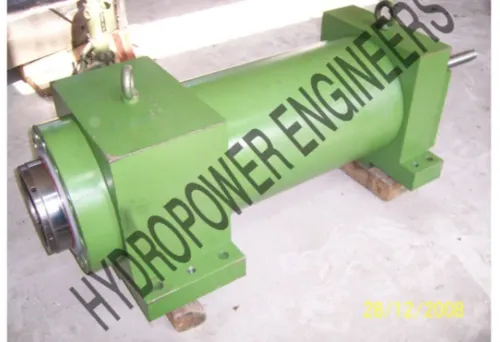
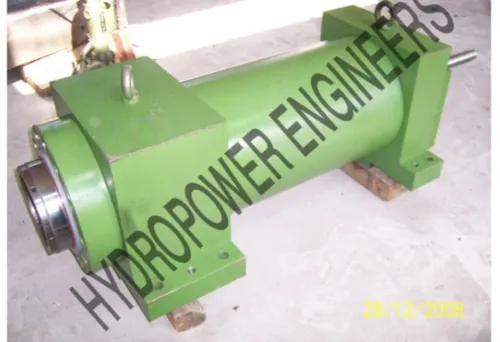
In a hydraulic press comparison, require closed-loop ram position, proportional valves or servo hydraulics, pressure transducers and cycle data—not pressure control alone. Hydropower Engineers can be asked to clarify whether its proposed C-frame machine suits general forming or a dedicated tube-bending tool set.
Related product
 | Hydraulic Presses We are a leading and well-recognized manufacturer of C-Frame Hydraulic Presses, widely used in applications such as embossing, punching, piercing,... View product → |
Frequently asked questions
How does a C-frame press differ from a squeeze bending machine?
A C-frame press drives a ram against a die and supports punching, straightening, embossing, and press forming. A squeeze bending machine applies controlled force through bending tooling designed for a specific tube or profile.
How should you choose between a C-frame press and squeeze bending machine?
Choose by part geometry and task. Use a C-frame press for varied operations and interchangeable tooling; choose squeeze bending when repeatable tube bends, defined radii, and production consistency are the priority.
Why is nominal tonnage insufficient for hydraulic press comparison?
Usable force depends on pressure, cylinder area, leverage, die width, stroke position, and friction. Calculate force at the tool and confirm it against the material, section, bend radius, and safety margin.
How do you control tube springback and ovality during bending?
Control tooling radius, clamping, support, bend speed, lubrication, and overbend compensation. Measure final angle, radius, and tube ovality on trial parts, then lock the settings in the process sheet.
What should a Bangalore machine purchase specification include?
Specify material grades, tube dimensions, bend radius, force at the tool, stroke, throat depth, tooling, controls, guarding, utilities, documentation, and a factory acceptance test with measured sample results.