A servo cylinder can mean a hydraulic cylinder with feedback, a complete valve-and-controller system, or an electromechanical actuator, so catalog comparisons often match unlike products. By the end, you will be able to compare the power source, bearing and seal design, feedback loop, mechanics, operating cost, and acceptance data before choosing equipment for Bangalore production conditions.
Key takeaways
- Compare the cylinder, feedback, valve, controller, pump, and accumulator as one motion system.
- Match bore, rod diameter, stroke, pressure, flow, and duty cycle to the machine load.
- Verify positioning accuracy with repeatability, hysteresis, linearity, and response-time tests.
- Request drawings, test records, service coverage, and commissioning responsibilities from Bangalore suppliers.
What are you actually comparing: cylinder, servo actuator, or complete motion system?
Compare the complete motion system, not the label “servo cylinder.” The term can mean cylinder hardware with an LVDT or magnetostrictive transducer, a hydraulic cylinder controlled by a servo valve, or an electromechanical roller-screw actuator. Separate the cylinder and servo actuator from the feedback system, valve or drive, controller, pump, accumulator, manifold, and motion-programming system.
Every quotation should state the power source, feedback device, control mode, and included equipment. That is the basis of a useful servo actuator cylinder comparison and a defensible servo cylinder comparison in Bangalore Division.
| Option | What you are comparing | When it applies |
|---|---|---|
| Hydraulic servo cylinder | Cylinder, sensor, servo valve, pump, and control loop | High peak force, shock loading, or long stroke where oil infrastructure is acceptable |
| Conventional hydraulic cylinder | Cylinder, on/off directional valve, and basic controls | Simple extension and retraction where precise position or force regulation is unnecessary |
| Electric servo actuator | Motor, drive, roller screw, encoder, and controller | Clean operation without oil; verify thermal capacity, screw life, peak-force duration, and regenerative energy |
| Pneumatic cylinder | Air cylinder and valve | Low-cost, compliant motion rather than precise load control |
| Rotary actuator | Torque-producing actuator and angular feedback | Output requires torque and angular travel, not linear force |
Hydraulic servo motion brings pump, valve, leakage, contamination, and oil-temperature issues, but handles demanding force profiles well. Electric systems remove leakage risk; pneumatic systems lose load-control precision.
Neither servo control fixes poor alignment, flexible frames, or inadequate guides, so compare measured tracking error, repeatability, settling time, force error, duty cycle, and energy under the same load.
How do hydrostatic-bearing and contact-seal designs change servo-cylinder performance?
A hydrostatic-bearing servo cylinder supports its rod or piston on an externally pressurised oil film; a contact-seal design guides and seals with bearing rings, wear bands, and elastomeric or polymer seals touching moving surfaces.
The first reduces friction, stick-slip, and response error at low speed, but it needs clean oil, pressure-compensation hardware, controlled clearances, and an uninterrupted supply circuit.
| Option | Performance trade-off | Main risk |
|---|---|---|
| Hydrostatic bearing | Lower friction, smoother motion, higher stiffness under controlled conditions, fast response | Supply failure, restricted clearances, and contaminated oil can collapse support |
| Contact seal | Simpler maintenance and greater tolerance of supply interruptions | Seal drag, extrusion, wear, rod scoring, and leakage can impair low-speed accuracy |
| Separate guide | Carries side load without loading the cylinder | Adds machine space, alignment work, and cost |
Neither design should absorb substantial side load without separate guides; side loading accelerates rod, bearing, and seal wear. In tube-processing machinery, guide the workpiece independently from the cylinder.
- Select the seal compound against the actual fluid: mineral oil, water-glycol, phosphate ester, biodegradable, and fire-resistant fluids are not interchangeable.
- Check temperature, pressure, speed, dwell time, rod finish, bore finish, and contamination; each changes seal life and leakage risk.
- Treat ISO 6020-2 and ISO 6022 as mounting-dimension standards, not proof of accuracy, dynamic response, seal life, or cleanliness capability.
This distinction should anchor any servo cylinder comparison in Bangalore Division: compare the supply circuit and service burden, not only the mounting envelope.
How should you size the cylinder and protect accuracy in real machinery?
Size force and speed separately. Extension force equals pressure multiplied by piston area; retraction force equals pressure multiplied by annular area after subtracting rod area. Flow demand is velocity multiplied by effective area, so different areas create different extension and retraction flow requirements.
1. State the bore diameter, rod diameter, stroke, rated force in both directions, operating and peak pressure, velocity, acceleration, reversal frequency, dwell, duty cycle, and mounting arrangement. Check pump capacity, servo-valve rating, manifold restriction, return-line pressure drop, and accumulator capacity; force compliance alone does not prove speed compliance.
2. Calculate rod buckling from compressive force, unsupported length, end restraint, alignment, and rod diameter. Bore size alone is insufficient for a long-stroke press or tube-processing machine. Use separate tooling or workpiece guides to remove side load from the rod and cylinder.
3. Specify oil temperature, viscosity, oil type, ISO 4406 cleanliness code, filtration beta rating, flushing procedure, and oil-sampling method. Contamination accelerates servo-valve wear; heat changes viscosity and seal behaviour. Inspect seal wear, hose expansion, oil compressibility, cylinder and frame deflection, rod-to-tool compliance, and alignment.
4. Treat an integrated LVDT or magnetostrictive sensor as a cylinder-position measurement, not guaranteed tool position. Hose expansion, oil compression, structural deflection, bearing clearance, and linkage compliance can enlarge load-end error. Include these effects in the servo actuator cylinder comparison and in any servo cylinder supplier bangalore specification, rather than comparing nominal resolution alone.
Which feedback and acceptance measurements prove accurate motion?
Accuracy claims are comparable only when reported in millimetres, millimetres per second, newtons, milliseconds, and degrees Celsius under the same load. For a servo cylinder comparison in Bangalore Division, separate these measurements:
| Measurement | What it proves | What can invalidate it |
|---|---|---|
| Commanded-position accuracy | Difference between target and achieved position | Frame compliance, alignment, or sensor offset |
| Repeatability and cycle-to-cycle variation | Spread across repeated moves | Changing temperature, load, or end-stop contact |
| Resolution and linearity | Smallest detected movement and deviation across stroke | Signal conditioning or sensor nonlinearity |
| Hysteresis and drift | Error between opposing travel directions and over time | Seal friction, temperature, or null shift |
| Settling time | Time to enter and remain within the stated position band | Resonance, tuning, or valve response |
| Velocity-tracking error and force error | Difference from commanded speed and force | Flow restriction, pressure loss, or load changes |
A linear scale measures directly at the tool or load. A magnetostrictive transducer or LVDT fits inside the cylinder with fewer external parts, but installation, temperature, signal conditioning, linearity, and mechanical end-stop repeatability still set total error. An external encoder measures the machine axis only if mounting stiffness and compliance enter the error budget.
Match the feedback output to the controller’s analogue or digital interface, update rate, sampling frequency, and loop requirements.
For a servo actuator cylinder comparison, record servo-valve null drift, hysteresis, deadband, rated flow, pressure drop, frequency response, and contamination tolerance. A high-bandwidth valve can expose resonance or poor tuning.
The factory test must reproduce extension and retraction force, speed, acceleration, deceleration, dwell, reversal frequency, oil temperature, and tooling load. A no-load demonstration proves little.
How do you qualify a servo cylinder supplier in Bangalore before purchase?
Treat a servo cylinder supplier Bangalore search as an evidence check, not a location check. A nearby address cannot prove machining control, calibration, cleanliness, or integration capability.
1. Request controlled drawings and tolerances for tube ID, honing, straightness, rod diameter, surface finish, plating, gland alignment, bearing clearances, seals, ports, mounting dimensions, and sensor installation. Reject a quotation that gives only bore, stroke, and pressure.
2. Require inspection records for sensor calibration, pressure testing, seal-compatibility testing, flushing, filtration, oil specification, ISO 4406 sampling, cleanliness control, and serial-number traceability. Confirm compatibility with the actual fluid, temperature, pressure, speed, dwell time, and surface finishes.
3. Ask the supplier to name every control-system component: servo valve, pump, accumulator, manifold, controller, software interface, safety circuit, and fail-safe method. For vertical or suspended loads, specify pilot-operated checks, counterbalance valves, mechanical blocking, and pressure monitoring; assess each device’s effect on response and accuracy because ISO 4413 alone does not prove safe holding.
4. Make the supplier test the complete duty cycle with representative tooling loads, extension and retraction force, speed, acceleration, deceleration, dwell, reversals, oil temperature, thermal drift, pressure drop, and structural deflection. A no-load demonstration can hide production failures.
5. Hydropower Engineers is worth evaluating as an industrial servo cylinder manufacturer Bangalore buyers can compare when its hydraulic-system, press, and tube-processing experience matches the test scope. Select on inspection records and measured acceptance results, not catalog language.
Related product
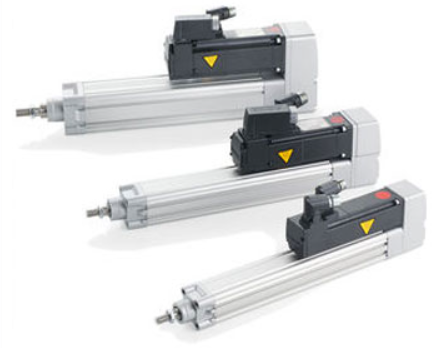 | Hydraulic Cylinders Depending on the requirements in terms of accuracy, servo cylinders are used with two construction designs, which differ in terms of the bearing of... View product → |
Frequently asked questions
What is included in a servo cylinder motion system?
Assess the cylinder or actuator alongside its LVDT or magnetostrictive transducer, servo valve or drive, controller, pump, accumulator, manifold, and motion-programming system.
How do hydrostatic-bearing and contact-seal designs affect servo-cylinder performance?
Hydrostatic-bearing designs reduce mechanical contact and friction for controlled motion, while contact seals add sealing force and wear considerations. Compare friction, leakage, contamination tolerance, maintenance, and required accuracy.
How should you size a servo cylinder for industrial machinery?
Calculate the required force, speed, stroke, acceleration, pressure, flow, buckling resistance, side load, duty cycle, and thermal load. Select bore and rod dimensions from those operating conditions rather than nominal tonnage.
Which measurements prove servo-cylinder accuracy?
Specify acceptance tests for commanded-versus-measured position, repeatability, hysteresis, linearity, drift, response time, overshoot, velocity stability, leakage, and performance under the actual load.
How do you qualify a servo cylinder supplier in Bangalore?
Review design drawings, material and seal specifications, feedback calibration records, pressure and endurance test results, integration scope, spare-parts support, commissioning responsibility, and local service response.