A press that still reaches its rated pressure can already have contaminated oil, a weakening frame, a leaking cylinder seal, or a dangerous stored-energy fault. By following a duty-based inspection schedule, reading failure symptoms correctly, and testing the machine before return to production, you can prevent avoidable downtime and identify when hydraulic press repair is necessary.
Key takeaways
- Isolate electrical, hydraulic and stored mechanical energy before inspection.
- Match oil, filter and inspection intervals to press duty and cycle severity.
- Check leaks, ram alignment, frame joints, die surfaces and load-bearing parts.
- Prove safe operation with documented repairs, test results and release approval.
Make the Press Safe Before Any Inspection or Repair
Switching off the pump motor does not make a frame hydraulic press safe. Oil trapped in the cylinder, an accumulator, gravity-held ram, die weight, and electrical circuits can still release enough energy to crush or strike someone.
- Notify affected workers, stop the press through its normal control, and place the ram in the manufacturer’s safe maintenance position. Remove the die or secure it against movement.
- Open the main electrical disconnect and every other energy-isolating device, then apply a personal lock and tag. Lock out remote starts, hydraulic power units, and auxiliary circuits.
- Isolate the hydraulic supply and accumulator. Follow the machine procedure to discharge the fluid side through the designated bleed point; never loosen a hose, fitting, or valve to release pressure.
- Lower the ram onto rated mechanical blocks or install the manufacturer’s safety pins. Do not rely on the cylinder, hydraulic pressure, or a check valve to hold it.
- Operate the controls in every direction and attempt a start from the normal station. Confirm that the motor cannot start, the ram does not move, and every pressure gauge reads zero. A qualified person must verify electrical zero energy; OSHA lockout/tagout requires this verification.
- Check for trapped pressure at each isolated circuit before removing guards or components, and keep hands away from suspected leaks.
This isolation step is the foundation of hydraulic press maintenance and frame hydraulic press care. Remove locks only after tools are clear, guards and interlocks are restored, personnel stand outside the danger zone, and a controlled return-to-service test is authorised.
Build a Duty-Based Oil, Filter and Inspection Schedule
Assign operators the checks that reveal a developing fault each shift; reserve oil sampling, filtration and internal inspection for trained maintenance technicians. Base intervals on cycle count and load as well as the calendar: shock-loaded or off-centre forming needs shorter intervals.
| Duty | Owner and frequency | Required checks |
|---|---|---|
| Each shift | Operator | Record cycle count, operating pressure, oil temperature, alarms and unplanned stops. Check reservoir level, oil colour or burnt odour, filter indicator, breather, visible leaks and abnormal pump noise. |
| Weekly | Technician | Inspect hose ends, hard lines, manifolds, valves, fittings, cylinder seals and pump shaft seals. Check filter differential pressure, breather condition, suction-strainer indication and water at the reservoir drain. |
| Monthly | Technician | Trend pressure, temperature, cycle count and filter readings against prior records. Sample oil for particle count and water; inspect reservoir contamination and verify the oil grade matches the manufacturer’s specification and viscosity range. |
| Annually | Technician | Drain or laboratory-test oil according to its condition, clean the reservoir and suction strainer, replace filters, and inspect frame, platen, guides, tie rods and bolted joints for fretting, looseness or deformation. |
A clean-looking oil sample proves little. Request an ISO 4406 particle count, which reports cumulative particles larger than 4, 6 and 14 micrometres per millilitre, and compare the result with the valve and pump manufacturer’s cleanliness target.
Never top up with an unverified oil. Incompatible base oils or additives can swell seals, reduce pump life and damage valves. A persistent filter alarm, rising water content, worsening particle count or a trend toward higher temperature requires maintenance before production continues.
Inspect Leaks, Load-Bearing Parts and Forming Surfaces
A thin oil film is not automatically a shutdown condition: wipe the area clean, run one controlled cycle, and check whether oil reforms, spreads, drips, sprays, or reaches a hot surface.
Stop the press for a fresh drip, a puddle, visible spray, rapid reservoir-level loss, or repeated rod wetting; do not treat recurring cylinder leakage as a top-up task.
During hydraulic press servicing, inspect these points:
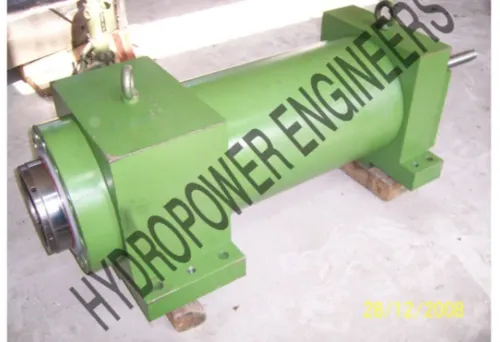
- Cylinder and rod: Look for scoring, pitting, corrosion, misalignment, hardened seals, and oil returning past the rod seal. Repeated wetting demands hydraulic press repair that identifies the cause, including side load or excessive case-drain pressure, before anyone replaces seals.
- Ram and guides: Check guide wear, looseness, galling, uneven contact, and ram drift. Binding or side loading can damage seals and distort forming.
- Platen and forming surfaces: Check parallelism, flatness, cracks, dents, fretting, die-seat damage, and polished patches that show off-centre loading.
- Frame, welds, columns, and tie rods: Inspect for cracks, stretched or loose tie rods, fretting at joints, corrosion, and permanent deformation.
- Bed and die-support areas: Check the bed plate, bolted joints, support blocks, and openings for cracks, looseness, deformation, or poor die seating.
Hydraulic pressure cannot correct poor platen parallelism or a bent load path. Mark any growing crack, displaced joint, or fresh fretting dust out of service until a competent technician evaluates it; continued cycling can turn a repairable defect into frame damage.
Diagnose Slow, Jerky, Hot or Weak Press Performance
Slow cycling, jerky ram movement, weak pressing force or rising oil temperature signals a fault that measurement must locate before hydraulic press repair begins. A pressure gauge at the pump outlet alone cannot prove where the loss occurs.
- Pressure loss indicates a relief valve set too low, a worn pump, an open bypass, or leakage across a valve or cylinder seal.
- Ram drifting with the directional valve centred indicates internal cylinder leakage, valve leakage, or trapped load-holding failure.
- Whining, rattling or growling from the pump points to cavitation from a restricted suction path, low reservoir level, blocked strainer, air ingress or excessive viscosity.
- High oil temperature indicates excessive throttling, a relief valve passing continuously, pump inefficiency, inadequate cooling or an undersized circuit.
- Uneven forming force points to off-centre loading, frame or platen deflection, unequal cylinder flow, air in the circuit or a partially restricted valve.
- Slow cycling indicates reduced pump flow, a clogged filter, flow-control misadjustment, hose restriction or a failing pump.
Verify the cause with a calibrated gauge, flow meter and temperature measurement at operating speed and load. Record standby and loaded pressure, cycle time, oil temperature, motor current and filter differential pressure; compare them with the machine specification and previous trends.
Inspect suction connections for air leaks, check valve and cylinder leakage, and test each cylinder separately if forces differ. Repeated rod wetting requires checking rod damage, alignment, side load, seal hardness and case-drain pressure before replacing seals. Good hydraulic press maintenance records turn symptoms into evidence, not guesses.
Document the Repair and Prove the Press Is Ready to Run
Release a press only after the repair record identifies the exact machine, cylinder, pump, valve, hose, oil grade, contamination result, calibrated test-gauge identity, settings before and after work, parts fitted, and post-repair results. Note ambient conditions and production duty in frame hydraulic press maintenance in bangalore division; dust, heat and humidity can change inspection intervals.
Require this return-to-service checklist:
- Confirm electrical and hydraulic isolation, ram support, accumulator discharge, and zero stored pressure before removing locks. OSHA’s lockout/tagout principle is a useful zero-energy benchmark.
- Record a pressure-hold test against the manufacturer’s rated setting and gauge calibration. Investigate pressure decay, cylinder drift, or a ram that descends without a command.
- Run controlled approach, forming and return cycles at low speed first, then normal speed. Check for jerking, abnormal noise, overheating and renewed leaks.
- Test the emergency stop, two-hand controls or foot control, guards, interlocks and point-of-operation protection. A hydraulic repair does not exempt moving parts from guarding checks.
- Inspect hose fittings, cylinder rod seals, manifolds and the frame for leakage, cracks, looseness or deformation, then sign the release with the technician’s name and date.
Choose specialist support for hydraulic press servicing when leakage returns after seal replacement, pressure remains unstable, an accumulator or safety circuit is involved, calibration equipment is unavailable, or frame damage and off-centre loading are suspected. Hydropower Engineers can be a practical specialist to involve when local technicians cannot prove the fault or certify safe operation.
Related product
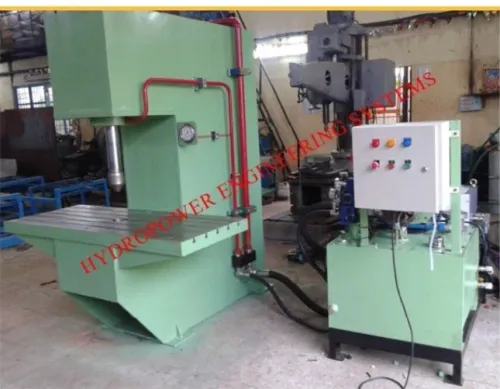
 | Hydraulic Presses The H-Frame Press is a machine powered by high-pressure fluid, used for shaping materials through applied force. View product → |
Frequently asked questions
How do you make a frame hydraulic press safe before maintenance?
Switch off and isolate the electrical supply, block or support the ram, release trapped hydraulic pressure, secure the die and discharge any accumulator before inspection or repair.
How often should you service a frame hydraulic press?
Set oil, filter and inspection intervals from the press duty cycle, operating temperature, contamination exposure, cycle count and manufacturer specifications rather than using one calendar interval.
What parts should you inspect during hydraulic press maintenance?
Inspect hoses, fittings, cylinders, seals, valves, the welded or bolted frame, ram alignment, guide components, load-bearing joints and forming surfaces for leaks, damage, wear or distortion.
What causes a hydraulic press to run slowly, jerk, overheat or lose force?
Check oil level and condition, filter restriction, air ingress, pump performance, relief-valve settings, cylinder seals, valve operation, temperature and mechanical misalignment.
How do you confirm a repaired hydraulic press is ready to run?
Record the fault, parts replaced, hydraulic settings and test results, then verify guards, emergency stops, leakage, ram movement, pressure holding and a controlled forming cycle before release.